
How this works
We start from your objective, not from a service list.
A winery with a first container and no U.S. presence needs something different from a winery whose wine is already sitting in a warehouse and not moving. The first needs a way in. The second needs rotation.
Not yet in the U.S., already imported by someone, or in the market with a distributor that isn't performing.
Volume, presence, price positioning or proof of concept before a bigger commitment.
The specific commercial actions that fit, and a clear split of what our team runs and what stays with yours.
Commercial actions are activated according to the needs, stage and objectives of each project.
The tools
Six commercial fronts. Rarely all at once.
Distributor development
Identifying distributors whose portfolio, territory and price positioning actually fit your brand — then making the introduction and supporting the negotiation.
Signing a distributor is the beginning, not the end. A portfolio can hold hundreds of labels, and the ones that move are the ones somebody keeps working on.
Fits when: you want scale and are ready to give up some margin for reach.
Retail
Independent wine shops and regional chains. Support for placement, for the first order, and for the follow-up that decides whether there is a second one.
Shelf presence is won and lost on reorders. A label that sells through gets re-stocked; a label that sits gets replaced.
Fits when: the brand needs visibility and a track record before a larger distributor will take it seriously.
On-premise
Restaurants and hotels. Support for developing the accounts, presenting to buyers and sommeliers, and getting onto a list.
Volume here is modest. The value is different: a by-the-glass placement puts your wine in front of people who have never heard of it, with somebody recommending it out loud.
Fits when: the wine has a story worth telling and a price point that supports it.
Direct-to-consumer
The eCommerce setup and the compliant shipping behind it — which states can be shipped to, under whose licence, with what reporting.
DTC offers the highest gross-margin potential per bottle, and the customer relationship stays with you. The trade-off is that every sale is one bottle at a time, and demand has to be created rather than placed.
Fits when: there is already an audience, or you intend to build one.
Hubly.club is our consumer-facing store in the United States, with compliant ordering and fulfillment infrastructure already in place.
Visit Hubly.club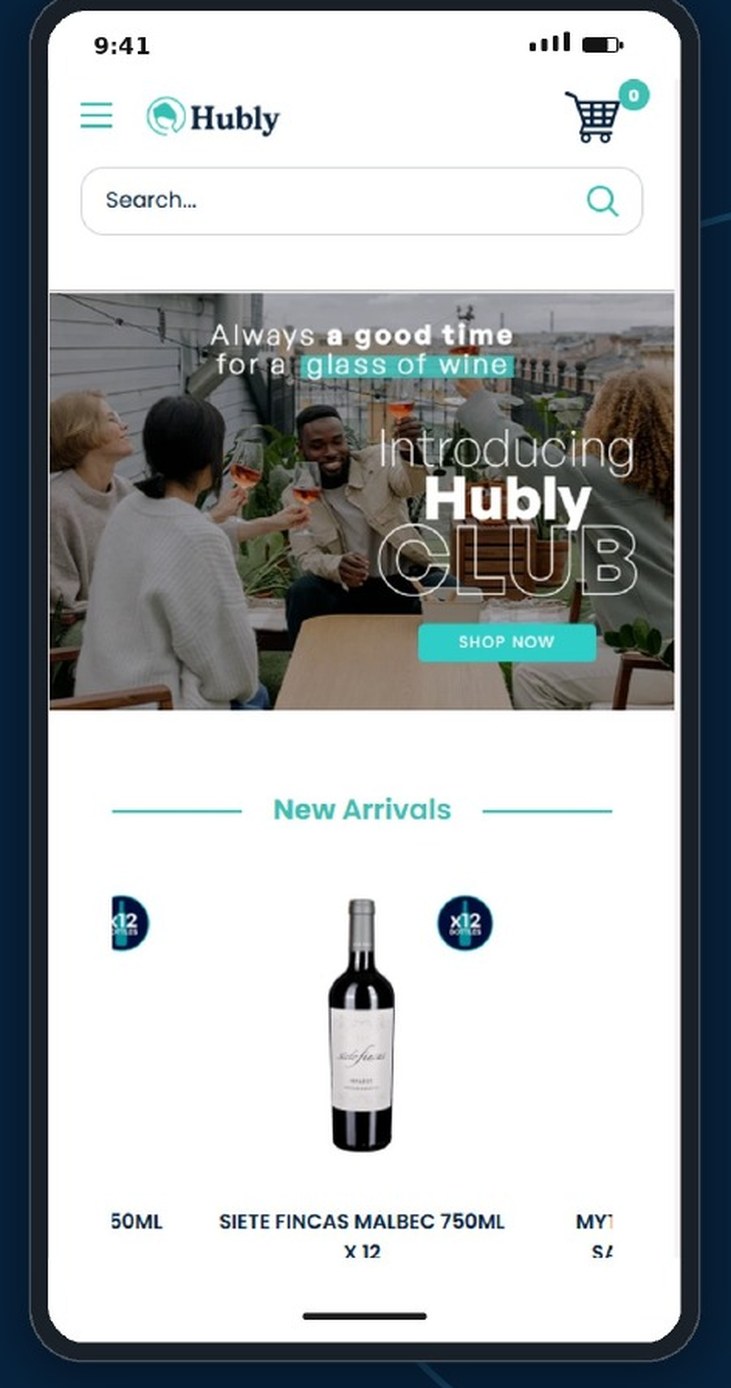
Lead generation
Building a pipeline of qualified buyers — importers, distributors, retail groups, on-premise accounts — instead of waiting for the market to find you.
Outbound campaigns, segmented lists and follow-up, run against a defined target profile rather than whoever happens to reply.
Fits when: the offer is clear and the constraint is reaching enough of the right people.
Digital marketing
The work that makes a label recognizable before a buyer has to decide: positioning, content, paid campaigns and the presence a serious buyer checks before answering an email.
It rarely closes a sale on its own. It changes how every other conversation starts.
Fits when: the brand is unknown in the U.S. and needs to stop looking like a cold email.
To be clear
What we are, and what we are not.
Hubly is not a packaged sales force you rent by the month. We combine an operating structure with commercial solutions, and how much of the selling our team runs directly depends on what the project needs and what you want to keep.
Some wineries want us to lead the commercial work. Others have their own team and need the structure, the introductions and the local presence. Both are normal, and the split is defined before anything starts.
The structure is fixed. The commercial plan is not.
Start here
Two minutes to see where you stand.
Take the two-minute Start and we'll show you the most practical path for your winery in the U.S.